Assign feature owners
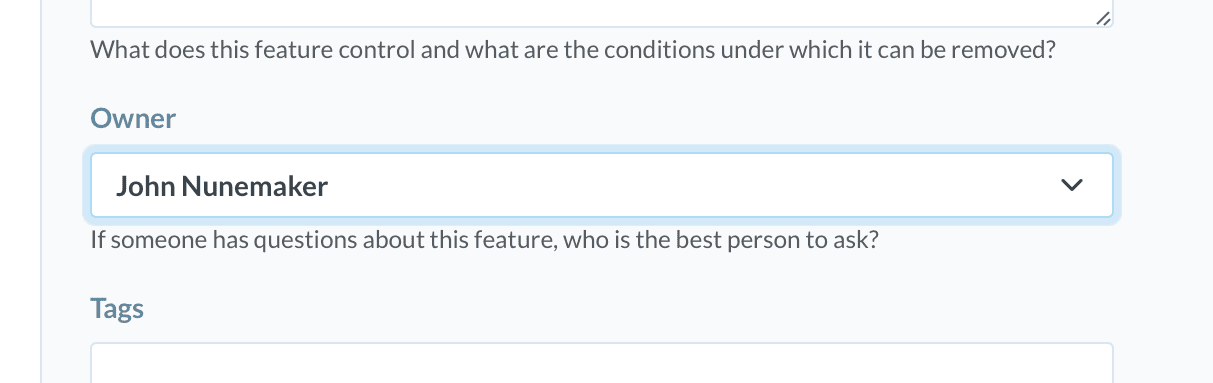
With feature owners, there's neve any question who to ask for updates or how to know if the team has plans for a given feature flag in the near future.
Know when flags are safe to delete
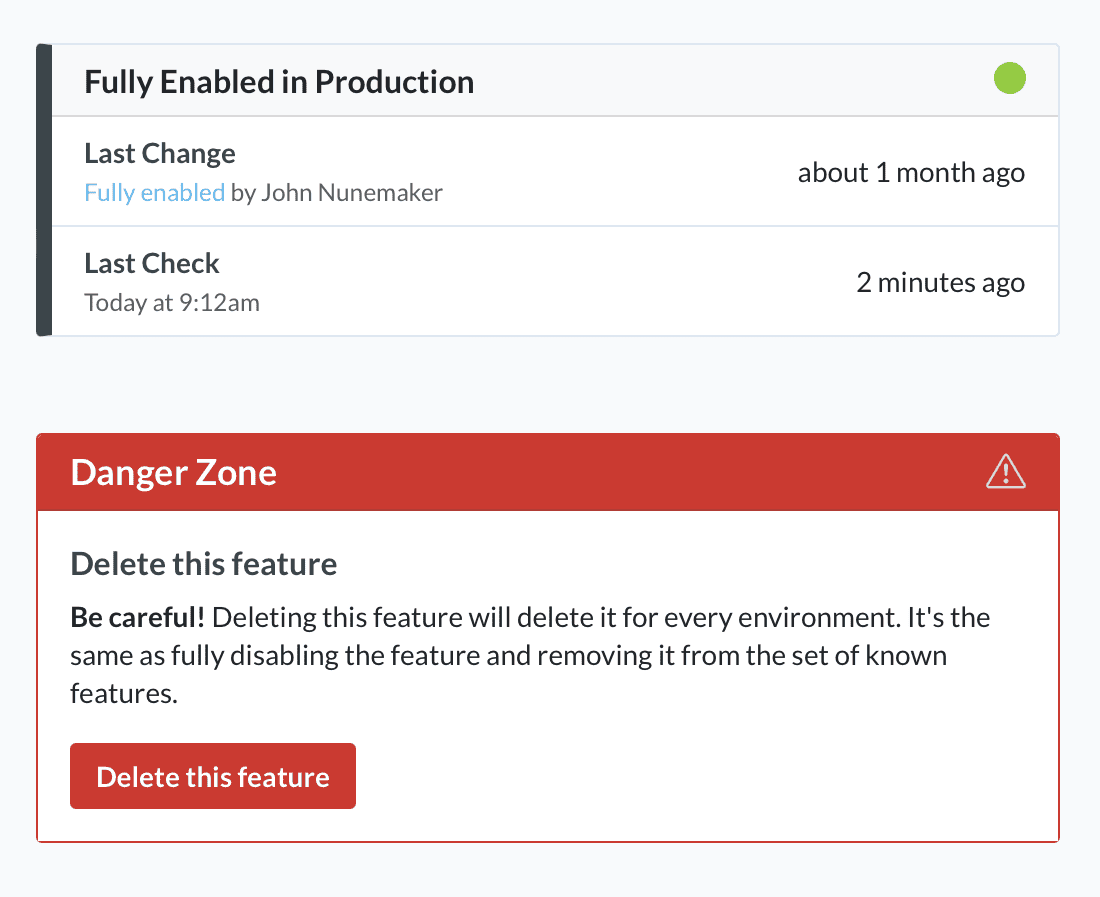
Flipper lets know the last time each flag was checked for each environment so temporary flags can be removed and deleted safely. Flipper lets know the last time each flag was checked for each environment so you always know when those temporary flags can be removed and deleted safely.
Tag related features
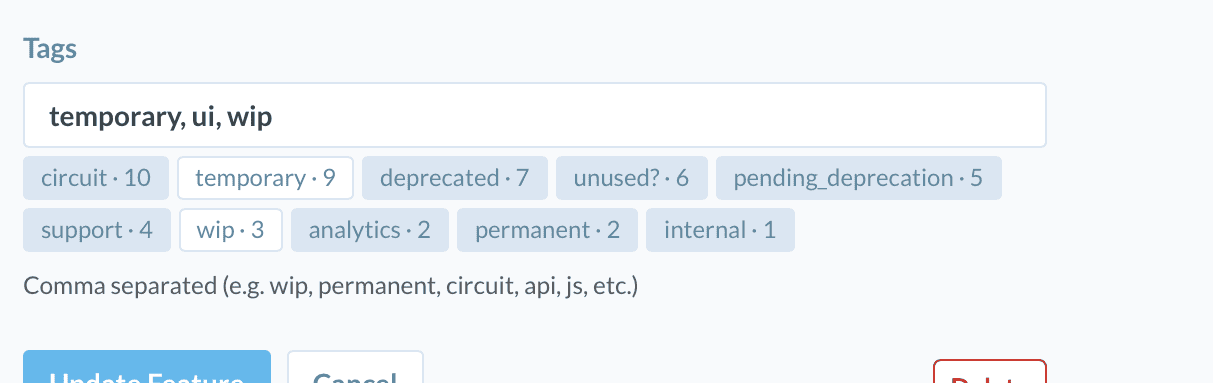
Temporary or permanent flag? Circuit breaker? Which area of the application does it affect? Tags help stay on top of all of your flags (quick demo).
Leverage unlimited projects and environments
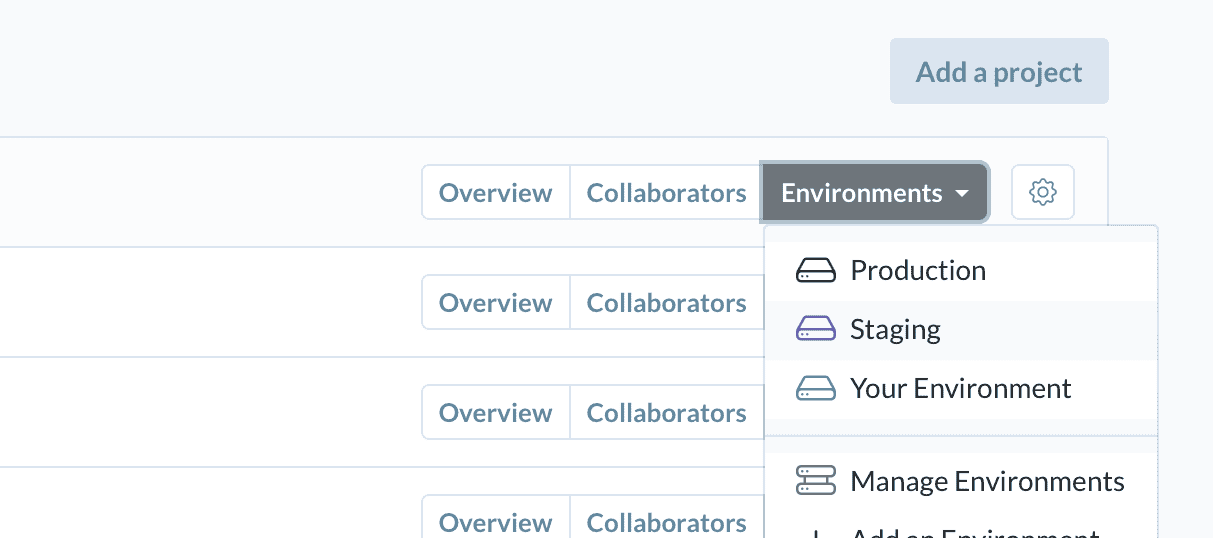
You can never have too many projects or environments, and you never have to worry about having too many. Keeping features organized is easier than ever.
Find anything instantly with Command+K
No matter how many features, projects, or environments you have, finding what you need is just a keystroke away. Press Cmd+K (or Ctrl+K on Windows/Linux) to open the search modal and start typing (quick demo). Search across features, environments, projects, and organizations instantly.
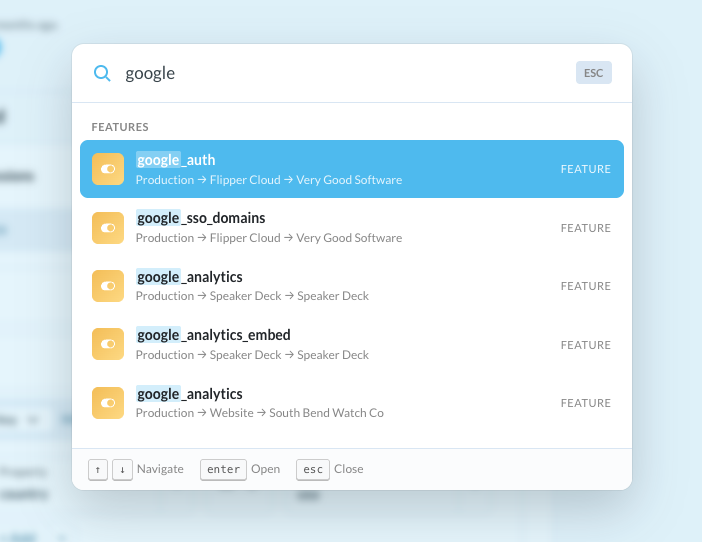
The search is context-aware too. When you're viewing a specific environment, quick actions appear for common tasks like viewing history, managing credentials, or configuring webhooks. It's the fastest way to navigate Flipper Cloud.
Stay current with the latest features
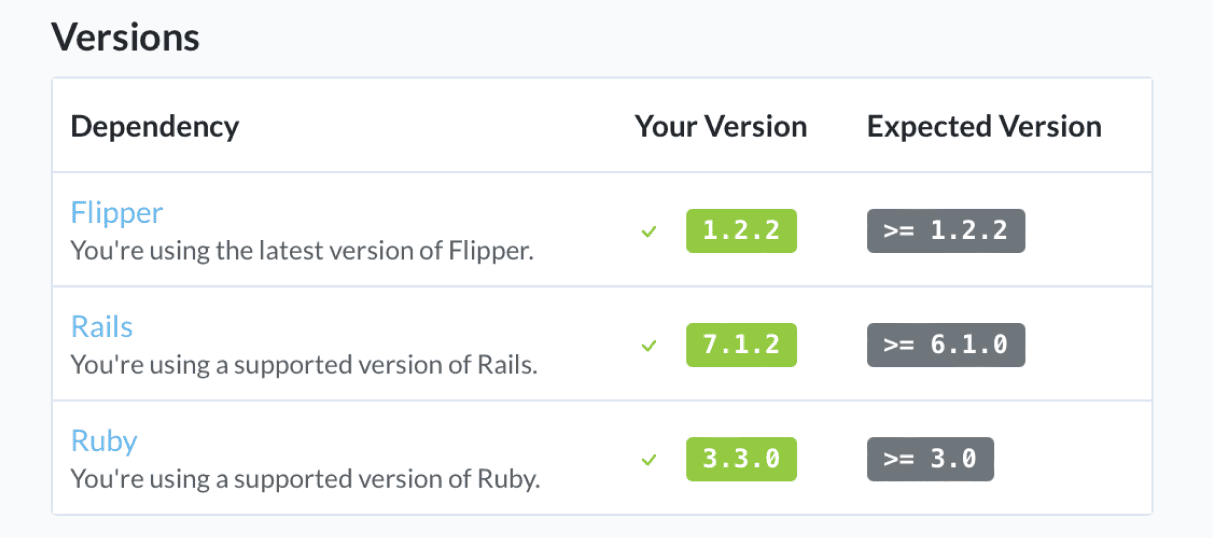
Managing dependencies and versions is just part of the process, but with Flipper, it's a little easier. If Flipper, Rails, or Ruby ever start to fall behind the target versions, you'll know ahead of time to help plan for any necessary updates.
Unlimited team members
While Flipper UI provides a great interface for managing feature flags, it doesn't support multiple team members and the resulting audit history as individuals make changes. With Flipper Cloud, not only are team members connected with their activity, but each team member has their own personal environment so they can develop against the flag data they need without stepping on anybody else's toes.
Getting people onboarded is easy too. Invite teammates directly, or verify your company's email domain and anyone who signs up with Google using that domain is automatically added to your organization. No manual invitations needed — your whole team can get started in seconds with the right access from day one.
Automated testing as a first-class citizen
Introducing feature flags means introducing alternative code paths, and that means testing those code paths. Flipper Cloud makes it easy to test your code with feature flags by providing a simple way to enable and disable features in tests.
require 'test_helper'

class DocumentationControllerTest < ActionDispatch::IntegrationTest
  test "returns 404 for documentation when feature disabled" do
    Flipper.disable(:docs)
    get documentation_path
    assert_response :not_found
  end

  test "renders documentation when feature enabled" do
    Flipper.enable(:docs)
    get documentation_path
    assert_response :success
  end
end